Anna Hughes · 30 October 2026
Modular Assembly Lines Gain Traction Among Vehicle Makers Seeking Production Scalability
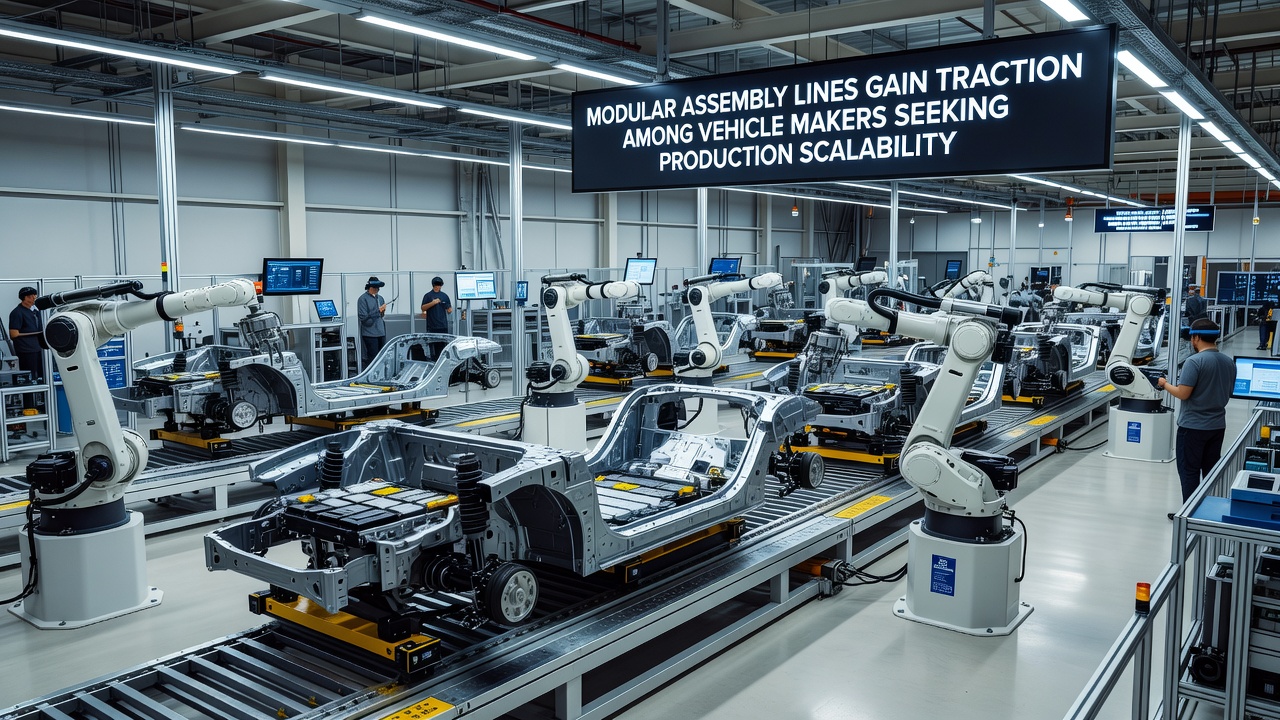
Vehicle manufacturers have accelerated the shift toward modular assembly lines as a direct response to fluctuating demand and the need for rapid production adjustments, with systems designed around standardized modules that connect and reconfigure without full line shutdowns. Data from industry tracking shows that between 2024 and 2026 the number of facilities adopting these setups increased by 28 percent across major production regions, driven by the transition to electric vehicles and hybrid models that require different component sequences than traditional internal combustion platforms.
These lines operate through interchangeable workstations that handle tasks such as battery pack installation, chassis welding, and final trim assembly, allowing operators to add or remove segments based on volume forecasts rather than rebuilding entire facilities. In October 2026 several North American plants reported completing reconfiguration cycles in under 72 hours, a timeline that supports just-in-time scaling during peak seasons or supply chain recoveries.
Core Components Driving Adoption
Standardized interfaces form the foundation of modular systems, with each station built on common power, data, and material handling connections that reduce custom engineering time by an average of 40 percent compared with fixed lines. Researchers at the University of Michigan Transportation Research Institute documented this efficiency gain through plant audits conducted in 2025, noting that the approach also lowers capital expenditure when introducing new vehicle variants because existing modules can be repurposed instead of replaced.
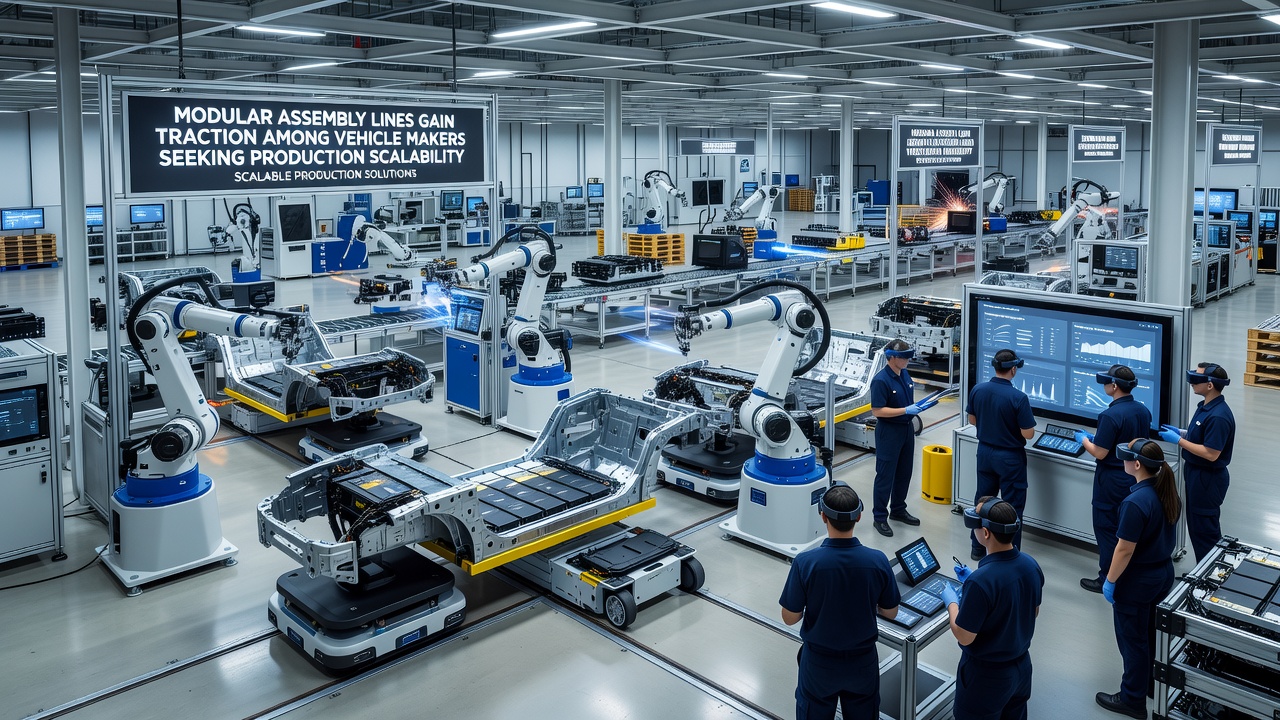
Automated guided vehicles and collaborative robots integrate directly into these modules, moving subassemblies between stations while maintaining traceability through embedded sensors. European manufacturers have paired the technology with digital twins that simulate line performance before physical changes occur, cutting validation periods from weeks to days according to figures released by the European Automobile Manufacturers' Association.
Regional Implementation Patterns
North American facilities have focused on retrofitting existing plants to accommodate both internal combustion and battery electric production on shared lines, whereas Asian manufacturers have built new greenfield sites around modular principles from the ground up. Australian industry reports highlight similar pilots in component plants supplying global vehicle makers, where scalability supports export volume swings without permanent workforce increases.
Supply chain partners have aligned their delivery schedules to modular takt times, delivering parts in standardized containers that feed directly into station buffers. This synchronization has reduced buffer inventory levels by 15 to 22 percent in plants that completed full transitions by mid-2026, based on operational data shared through industry benchmarking groups.
Workforce and Training Adjustments
Operators receive cross-training on multiple module types so they can shift between stations as line layouts change, a practice that has expanded skill sets while maintaining output consistency. Training programs now incorporate virtual reality simulations that replicate module reconfigurations, allowing teams to practice new sequences before equipment arrives on site. Government workforce agencies in Canada have funded portions of these programs through automotive sector initiatives, linking them to broader manufacturing resilience goals.
Maintenance protocols have also evolved, with predictive analytics monitoring module performance across sites and flagging components that require service before downtime occurs. Plants using these analytics report 12 percent fewer unplanned stops than facilities relying on scheduled maintenance alone.
Conclusion
Modular assembly lines continue to expand across vehicle manufacturing because they deliver measurable improvements in reconfiguration speed, capital efficiency, and adaptability to changing product mixes. As production volumes stabilize around new powertrain technologies, the systems provide a repeatable framework for scaling output without proportional increases in facility footprint or downtime. Ongoing data collection from operating plants will determine how far these benefits extend into the next generation of vehicle programs.